In the last 3 weeks I have learned a lot
of myself that I didn’t know before, such as my personality seen
by
the
eyes
of other people, my best ways for learning and finally
my
real interest on
what
I want
to
study
and make my career.
So after doing all the activities
(test and quizzes) and
thinking
very
deeply
I have
choose
between
to
possibilities:
Architecture
and Engineering.
Well I know that I am far way from the real decision of what
I want
to
study
because
there
are a lot of Engineering
carees like: Mechanical , Electrical
, Computer
etc.
And that I am also really interested in being
a great
Architecture
so for that reason in this work I will talk about the two school in which I would like to study each one of the careers:
uArchitecture
in Harvard University
uEngineering in the
Massachusetts Institute of Technology
(MIT)
Harvard university


Massachusetts institute of technology


The Harvard University
is
a private
Ivy
league research university
in Cambridge, Massachusetts, U.S. Its history, influence
and wealth have made it one of the most prestigious universities
in the world.
This university was
established
in 1636 by the Massachusetts legislature
and soon thereafter named
for
John Harvard its
first
benefactor. Harvard is the U.S oldest institute of higher
learning.
It is organized into
11 separate academic
units
(ten faculties and the
Radcliffe
Institute
for
Advanced
Study).
Harvard has nurtured
many
prominent
alumni
8
U.S. presidents have
been
graduates,
and 144 Nobel Laureates have
been
student,
faculty,
or
staff
affiliates.
Harvard is also the alma mater of sixty-two
living billionaires,
the
most
in the country and The
Harvard
University
Library is also the largest academic
library
in the United States, and one of the largest in the
world.
I found an article from boston.com titled
Harvard = Hogwarts? During spring semester, freshmen are sorted into one of 12 houses, just like in Harry Potter, though sans the talking wizard hat. Each Harvard house has its own residence hall, gym, dining hall, and common areas. Students can choose to be sorted with up to eight of their friends, alleviating the possibility that they’ll end up in a house with total strangers.
“It’s a really cool way to get a small-college feel in a large university,” said Billy Gorman, a junior studying government with a secondary in English and a member of Kirkland House(the same as Mark Zuckerberg). “It’s the biggest event of freshman year.”
But even before sorting, life is pretty Potter-like. Freshmen eat in the giant gothic structure that is Annenberg Hall, which “looks like the Great Hall from Harry Potter,” Gorman said.
Students scream stark naked. At the end of every semester, as the clock strikes midnight on the first day of finals, Harvard students strip down to their birthday suits and run laps around Harvard Yard, screaming as loud as they can to relieve that pre-exam tension (or just because it’s a funny and ridiculous thing to do).
“People who are really hardcore do it in the winter,” Gorman said. “I don’t know how anyone does it sober. I would say most don’t.”
Known as Primal Scream, the event is rumored to have begun with students simply opening their windows and screaming at midnight; now, it’s a rite of passage for every Crimson.
Harvard and Yale fought before it was cool. As part of the oldest rivalry in the U.S., Harvard and Yale have played a total of 128 football games -- known simply as “The Game”-- against each other; Yale has 65 wins, but Harvard has won 10 of the past 11 meetings.
“Regardless of what our record is, if we beat Yale, the year is considered worth it,” Gorman said. “That football game is the closest we’ll ever get to a ‘BC-like’ football experience.”
In 2004, Yale students disguised as the “Harvard Pep Squad” handed out signs to the Crimson fans and told them that when raised, the cards would spell out “Go Harvard.” In fact, they spelled out “We Suck.” Harvard has yet to pull off a truly successful retaliation.
Trying to dig your way to China? Start in Widener Library. Widener Library’s 10 floors (four of which are underground) make it the second-largest library in the U.S., and a great place to see an awesome view or avoid sunlight altogether, depending on your preference.
“It’s really pretty on the inside,” said junior Patricia Mathelier of the building that’s named after Harry Elkins Widener, a 1907 graduate who died aboard the Titanic. Widener’s mother, Eleanor Elkins donated $3.5 million to the university to have a library constructed in her son’s name. The buzz around campus is that when Elkins donated the money, she did so with the stipulation that the library could never be altered -- which is why the builders had to go underground.
“Widener can’t be expanded,” Mathelier said. “They actually had to start building down.”
Another legend among the Crimson is that, in an effort to prevent deaths similar to that of her son, Elkins wanted all Harvard students to pass a swim test in order to graduate. That rule is no longer in effect.
Visitors worship a statue of lies. If you ever find yourself near Harvard, make sure to give its namesake’s statue’s foot, which stands in Harvard Yard, a little rub for good luck. A lot of Harvard hopefuls believe touching the statue will give them a better chance at getting into the competitive school, Mathelier said. But she also cautioned that the spot tourists place their hands on day after day is the same spot that students tend to pee on in a drunken stupor at night.
“People have put their babies on it,” she said. “I feel really bad.”
Even worse? The statue isn’t even John Harvard! It’s supposed to be, but no pictures of the benefactor exist, so the statue’s creator, Daniel Chester French, used a friend as his model for the 1884 masterpiece.
Massachusetts institute of technology

The MIT is a private research
univerity
in Cambridge, Massachusetts, U.S. MIT has 5 schools and
1 collegue,
containing
a total of 32 academic departments,
with
a strong
emphasis
on
scientific,
engineering,
and technological
education
and research.
Founded in
1861 in response to the increasing industrialization
of the United States, the institute used
a polytechnic
university
model
and stressed laboratory
instruction.
MIT's educational
disciplines have expanded beyond
the
physical
sciences
and engineering into
many
fields
such
as biology, economics,
linguistics,
and management.
78 Nobel laureates,
52 National Medal
of Science recipients,
45 Rhodes Scholars, and
38 MacArthur Fellows are currently
or
have
previously
been
affiliated
with
the
university.
MIT has a strong entrepreneurial
culture. The aggregated revenues
of companies founded
by
MIT alumni would rank as the eleventh-largest
economy
in the world.
I also found the MIT version of the 5 things to know about the school:
Want to sail the Seven Seas? Head to MIT. That's right: MIT offers a pirate certificate to students who complete four physical education classes: pistol, archery, sailing, and fencing. "It's kind of tough to get into sailing," Maybury said. "You have to take a bunch of classes. They're not just going to put anyone out on the Charles."
Although MIT forbids their pirates from committing actual acts of piracy, it's a big deal to receive the certificate. "People get so excited about it," said Christine Sowa, a sophomore studying management and mathematics, who has taken sailing and is therefore one-quarter pirate.
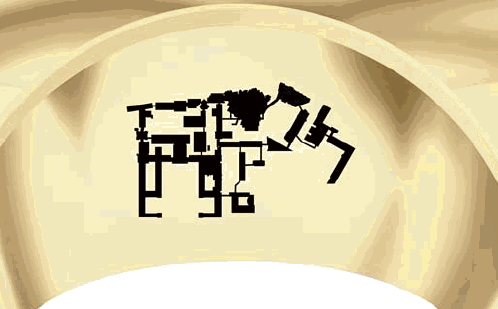
MIT students aren't just using the school's tunnel system to avoid sunlight.Plenty of colleges have underground tunnel systems, but not many are as vast as the one at MIT; the seemingly endless, intricate network connects nearly every building on campus.
"It's pretty cool that it connects all of the buildings," said Sowa, who added that she often sees students racing through the tunnels in wheely chairs, "but I think it's more used by the people that do the hacking."
Not to be confused with the school's other type of hacking, tunnel hacking refers to exploring the system's unauthorized spaces, mostly just for the thrill. But last year, a group of students combined the two types of hacking, arranging thousands of tiny green army men throughout the tunnels, Sowa said. "It was just really funny because it all happened overnight," she said.
Hacking is so huge at MIT that in recent years, students have had the option to include a hacker's map on their class ring.
Everything at MIT is numbered. Seriously, everything. MIT students pretty much speak in code: Rather than using names for buildings or courses, they use a system of numbers understood only by their species. A computer science major, for example, is 6-3, Maybury said.
"MIT students really like to speak their own language," said Sowa, who thinks the system came to be because her peers just really love to quantify things. "I didn't know about the numbering system before I came to MIT, so I was really confused the first few weeks."
MIT students can't fail. In an effort to ensure student happiness, MIT instituted a policy for first-semester freshmen known as "pass, no record": If students don't pass the class, there's no record of them ever taking it. In the second semester, the policy changes to "ABC, no record."
"MIT really wants their students to be happy. They know that students here can be pretty hard on themselves," Sowa said. "It's a hard transition, and it can be really difficult for students to figure out how to budget their time.
Technically, a student could earn his degree without taking any core classes -- as long as he's smart enough to pass the tests that get him out of each subject. But proceed with caution: Those tests are incredibly challenging and have high requirements for a passing grade, Maybury said. "I looked at the chem one and handed it right back," he said.
It may be the "Harvard Bridge," but it's got MIT's mark all over it. Allegedly, back in the late 1800s, both Harvard and MIT were vying to be the namesake for the Harvard Bridge (i.e., the Mass Ave. bridge). When Harvard won, MIT officials took the decision to court -- then mysteriously dropped the case after their architects and mechanical engineers inspected the building plans. Apparently, the school didn't want to have its name on such a poorly designed bridge.
(And while that story is interesting and all, the Harvard Bridge was built in 1891. MIT did not move to its current location until 1916.)
Still, thanks to MIT alum Oliver Smoot, there's no doubt whose bridge it really is. In October 1958, when Smoot decided to join a fraternity, one of his rites of initiation was to measure the Harvard Bridge in an unheard-of unit of measurement: himself. And so, those that cross the span will forever know that it's a 364.4-smoot (plus one ear) trip between the banks of the Charles; a member of Smoot's former fraternity re-paints the measurement markings every semester.


No comments:
Post a Comment